Programmers' Favourite: Why Britain's Independent Cinemas Cannot Quit 127 Hours

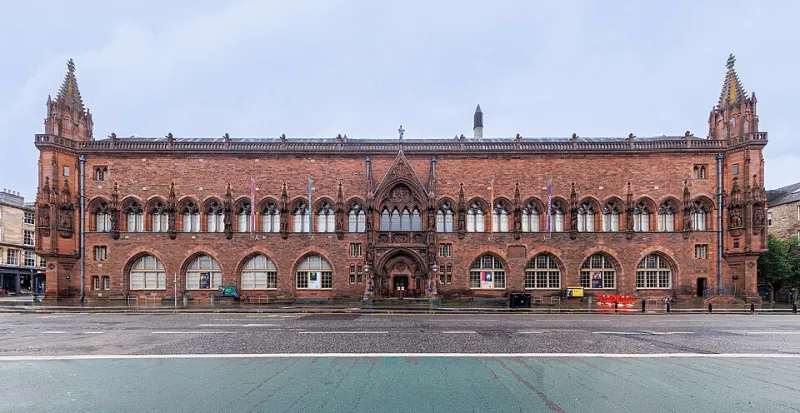
Photo: hayley green, CC BY-SA 2.0, via Wikimedia Commons
Most films, once their theatrical run ends, quietly vanish into the streaming ether. A select few are granted the occasional anniversary revival. And then there is 127 Hours — a film that, fifteen years after its release, continues to appear on the programmes of Britain's independent cinemas with the reliability of a seasonal fixture.
Ask around the repertory circuit and a pattern emerges. Sheffield's Showroom has returned to it repeatedly. London's Prince Charles Cinema has slotted it into late-night programmes where it routinely outperforms films a fraction of its age. In Bristol, Glasgow and Leeds, programmers report the same phenomenon: name a date, put 127 Hours on the board, and the seats fill.
The Film That Works Better With Company
"It's one of the very few back-catalogue titles we can programme almost on a whim," says one exhibition source familiar with several regional programmes. "Most catalogues need a hook — a restoration, an anniversary, a director's death. This one just needs a slot."
The reasons offered are consistent. First, the film's premise is so widely known in Britain that the marketing burden is effectively zero. The canyon, the boulder, the arm — the story has passed into common cultural shorthand, much like the shark from Jaws or the shower scene from Psycho. A poster alone does the work of a campaign.
Second, and more interestingly, the film's reputation for physical intensity has become its own draw. British audiences, it turns out, rather enjoy being warned. The famous fainted-in-the-aisles anecdotes from the original release — discussed endlessly at the time and since — have hardened into a kind of dare. Attending a late screening of 127 Hours is a small, voluntary ordeal, and doing so in a crowded room transforms private dread into something communal.
"You can watch it at home, plenty of people have," the same source notes. "But the wince is amplified a hundredfold when there are two hundred other people wincing with you. That's not something a sofa provides."
Late Nights and Full Houses
The scheduling patterns are telling. 127 Hours thrives in the late-night slot — the 10.30pm or 11pm showing, the province of students, cinephiles and the mildly reckless. This is the domain of the Prince Charles, whose cult programming has long understood that certain films are, in effect, participatory events. Boyle's film sits comfortably alongside The Room and Withnail and I in that respect, though its participation is of a quieter, grippier kind: gasps, laughter at the wrong moments, and a collective exhale when the credits arrive.
Programmers also point to the film's compact running time — a shade over ninety minutes — as a practical asset. It fits neatly into a double bill, pairs naturally with other survival or confinement narratives, and leaves room for a Q&A or a intro talk without running past midnight.
The Anniversary Economy
There is, of course, a structural explanation too. The repertory circuit in Britain has grown considerably over the past decade, sustained by a younger audience for whom the cinema is a destination rather than a default. That audience demands titles with cultural weight and rewatch value, and 127 Hours — Oscar-nominated, Boyle-directed, and anchored by a performance that made James Franco's name in the awards conversation — ticks both boxes while remaining scarce enough on subscription platforms to make a cinema trip feel worthwhile.
Anniversaries help. The film's tenth birthday prompted a wave of bookings; its fifteenth has done likewise. But programmers insist the anniversaries are a pretext rather than a cause. "We've run it in years with nothing to mark at all," one admits. "It doesn't need an excuse. It needs a screen."
The Endurance Test
There is something fitting about all this. A film about a man trapped in one place, forced to endure beyond what seems possible, has itself proved remarkably durable — outlasting the blockbusters it premiered alongside, outliving the discourse of its release window, and settling into a second life as a fixture of Britain's independent screens.
Boyle's film ends with Aron Ralston walking out of the canyon and back into the world, blinking at the light. British repertory cinema, it seems, has decided he can keep walking — one late-night screening at a time.
Check local listings at the Showroom, the Prince Charles and your nearest independent; the canyon, apparently, is never far away.