The Ralston Factor: How One Film Rewrote Britain's Walking Kit List
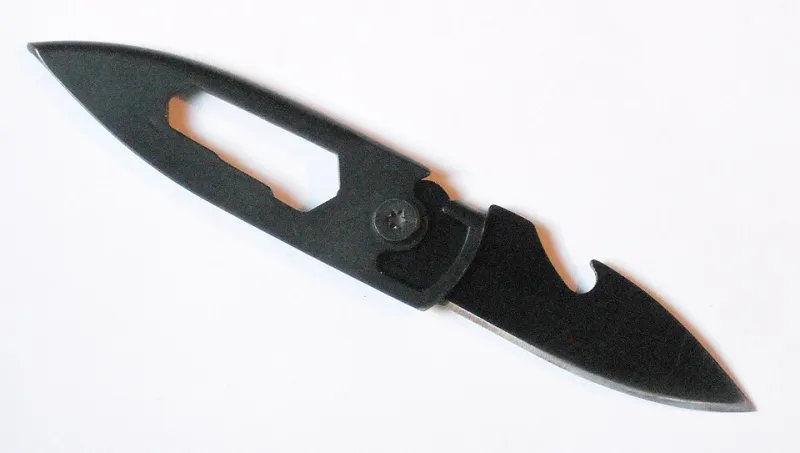
Photo: Simon Speed, CC0, via Wikimedia Commons
There is a moment, roughly halfway through 127 Hours, when Aron Ralston rummages through his rucksack and inventories his belongings. Climbing gear, a video camera, a rope — and, crucially, a cheap multi-tool with a blunt blade. For most audiences it is a piece of set dressing. For a certain kind of British hillwalker, it landed like a slap.
In the years since the film's release, that slap has echoed through the outdoor retail trade in ways nobody predicted.
The Multitool Phenomenon
Ask any long-serving shop assistant at one of Britain's outdoor chains about the film and the response is remarkably consistent. In the months following its January 2011 release, requests for multitools — the folding contraptions combining pliers, saws, blades and bottle openers — rose noticeably.
"We had people come in who'd never owned anything more technical than a picnic set," recalls one manager of a Lakeland outdoor store. "They'd seen the film at the weekend and they wanted to know exactly which knife Ralston had, and whether ours was better."
It was not merely about the blade itself. The film's most enduring lesson — that Ralston had left without telling anyone where he was going — turned an entire category of product from novelty to necessity. Map cases, whistles, emergency bivvy bags and, later, satellite communicators all enjoyed a lift in fortunes that retailers privately attribute, at least in part, to a single Hollywood film.
A Cautionary Tale That Sold Kit
What makes this commercial ripple so fascinating is that 127 Hours never set out to sell anything. Danny Boyle's film is, if anything, an argument against solo recklessness. Yet its depiction of preparedness — or the lack of it — proved to be the most effective public safety announcement the hiking world never commissioned.
Mountain rescue volunteers noticed the shift too. Several teams report that post-2011, walkers began leaving route plans with family members in greater numbers, and that the phrase "like that bloke in the canyon" became shorthand in incident reports and safety talks alike.
"You can lecture people until you're blue in the face," says one long-serving member of a Peak District rescue team. "But a film does something a leaflet never can. It makes the consequences vivid. People watched that arm scene and decided, quite sensibly, to buy a torch and tell someone where they were going."
The Guided Adventure Boom
The effect extended beyond the kit bag. In the years after release, UK adventure travel operators reported growing interest in guided canyoneering trips — with clients explicitly citing the film as their inspiration. The Bluejohn Canyon area itself, once a quiet corner of Utah, saw a measurable rise in British visitors making the pilgrimage.
Domestically, the film's legacy can be felt in the boom in scrambling courses, navigation training and guided gorge walks across Snowdonia, the Cairngorms and the Yorkshire Dales. The appetite for controlled risk — adventure with a qualified professional holding the rope — is arguably part of Ralston's inheritance.
Preparedness as Culture
There is something distinctly British about the whole phenomenon. We are, as a nation, more likely to pack a spare jumper than a satellite messenger, and the film's real gift to UK outdoors culture may be that it made cautiousness fashionable. Leaving a route plan is no longer the preserve of anxious parents; it is simply what one does.
Fifteen years on, the multitool in your walking companion's rucksack may well be a quiet tribute to a film that showed, in unflinching detail, exactly what happens when you go without one. Every second counts, as we like to say — and so, it turns out, does every item on the packing list.