Britain's Own Slot Canyons: Five Gorges Where 127 Hours Feels Closer Than You Think
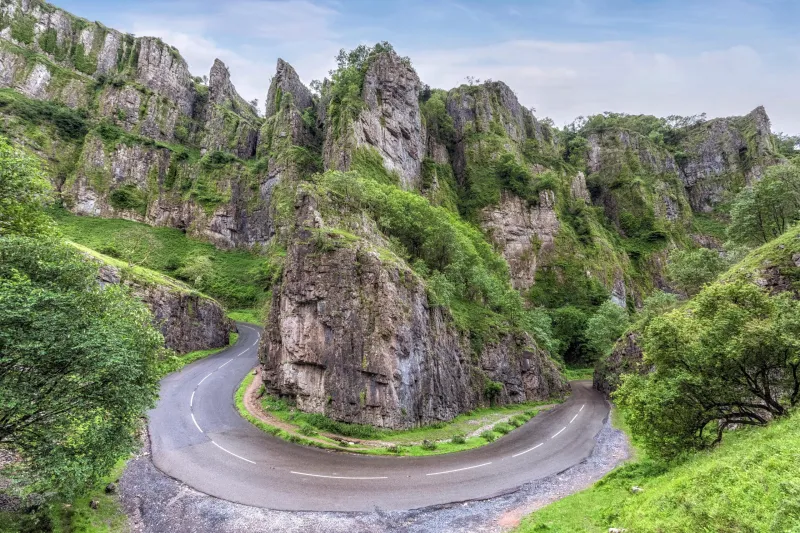
Photo: Cheddar Gorge limestone cliffs Somerset walking trail, via keyassets.timeincuk.net
Watching 127 Hours, many British viewers assume the film's terror could never unfold on home soil. No Utah desert, no Blue John Canyon, no eighty-foot slot of sandstone narrowing to a few feet. Yet Britain possesses its own collection of gorges and ravines — dramatic, remote-feeling, and in places every bit as unforgiving. Aron Ralston's ordeal began with a moment's misjudgement on a solo hike; these five locations, each beautiful and each demanding respect, invite us to walk similar terrain far more safely.
Cheddar Gorge, Somerset
The largest gorge in the United Kingdom carves nearly 400 feet through the Mendip Hills, its limestone walls riddled with caves and peregrine territory. The clifftop walk traces roughly three miles along both rims, offering vertigo-tinged views across the Somerset Levels.
Practicalities: Park in the village centre (arrive early in summer — the car parks fill by mid-morning). Wear proper footwear; the limestone path turns treacherous after rain. Mobile signal is patchy along the upper sections, so download an OS map before setting out.
Fairy Glen, Isle of Skye
A tumble of grassy, cone-shaped hills threaded by the narrow gorge of the River Conon, the Fairy Glen feels otherworldly — a miniature labyrinth where paths vanish and reappear between knolls. It is precisely the kind of landscape where a wrong step on wet basalt can twist an ankle with no one else in sight.
Practicalities: Access is from the unclassified road near Uig; parking is limited and the single-track roads demand patience. The terrain is short but uneven — sturdy boots rather than trainers.
Gordale Scar, North Yorkshire
Perhaps the most 127 Hours location in England: a hidden ravine reached through a collapsed cavern, where two waterfalls pour down a cleft of pale limestone. Victorian painters including J.M.W. Turner made the pilgrimage here, and the final scramble up the tufa-covered rocks remains genuinely committing.
Practicalities: The classic route links Malham Cove, Malham Tarn and Gordale Scar in a seven-mile circuit. The gorge ascent involves wet rock and a short climb — many walkers sensibly turn back and take the footpath over the top. Never attempt the scramble alone after heavy rain.
Ingleton Waterfalls Trail, North Yorkshire
A defined five-mile trail through a series of deeply cut ravines on the edge of the Yorkshire Dales, where the Rivers Twiss and Doe funnel through narrow, moss-walled gorges. It is gorge-walking with guardrails — dramatic scenery without the exposure.
Practicalities: There is a charge for the trail and it closes at dusk, sharply enforced. The steps are steep in places; allow three hours and check the forecast, as the ravines hold water after storms.
Grey Mare's Tail and White Coomb, Dumfries and Galloway
The National Trust for Scotland's hanging valley near Moffat drops a 200-foot waterfall into a steeply walled gorge. The climb to Loch Skeen beside the tumbling burn is rugged, exposed to weather, and frequently empty even in season — remote in a way southern walkers underestimate.
Practicalities: Rough ground throughout; hillwalking clothing and navigation skills are essential. The weather can turn in minutes, and rescue times in this terrain are measured in hours, not minutes.
What Ralston's Story Teaches the British Walker
The film's most enduring lesson is not about canyons at all. Ralston survived because he had water, a multi-tool, and — crucially — because someone knew roughly where he had gone. He had told no one. His own account, and the film built from it, turned that oversight into a cautionary tale retold in every hillwalking safety briefing since.
The advice translates directly: leave a route plan with a trusted contact; carry a charged phone and a power bank; consider a GPS beacon such as a two-way satellite messenger for genuinely remote areas; check conditions before committing to gorges, where rockfall and flash flooding are real hazards even in Britain; and be honest about turning back. Mountain Rescue England and Wales and their Scottish counterparts attend thousands of incidents a year, entirely free of charge, and would far rather retrieve a walker early than late.
The landscapes above offer a taste of the film's setting without its dangers — narrow stone corridors, falling water, silence deep enough to hear your own pulse. Walk them, marvel at them, and carry the film's lesson with you: the wildness is the point, but so is coming home.