Against All Odds: Ten True Survival Ordeals That Echo the Spirit of 127 Hours
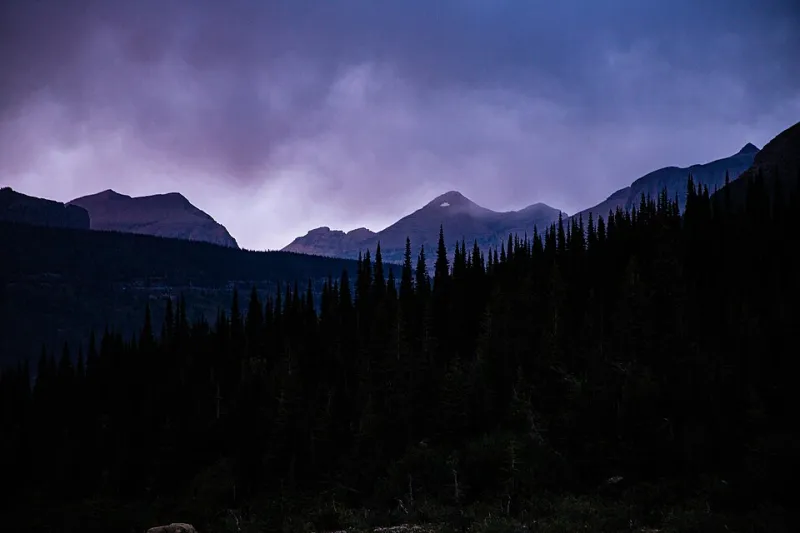
Photo: GlacierNPS, Public domain, via Wikimedia Commons
When audiences first sat down to watch 127 Hours, many assumed no story could feel more improbable than Aron Ralston's — a man trapped by an 800-pound boulder in a remote Utah slot canyon, forced to amputate his own forearm with a blunt multi-tool to escape. And yet, the history of survival is crowded with ordeals every bit as extraordinary. Some took place closer to home than you might think, on British hills and in waters around our own coastline.
What unites these accounts — and what Danny Boyle's film captures so unflinchingly — is the truth that survival is rarely about strength alone. It is about decisions made in seconds, and the refusal to let those seconds slip away.
1. Aron Ralston — Blue John Canyon, Utah (2003)
The story that inspired the film deserves its place at the top. Trapped for five days and seven hours, Ralston rationed two burritos and 300ml of water, recorded video messages to his family, and ultimately performed a self-amputation before hiking six miles to safety. His ordeal remains the benchmark against which all survival tales are measured.
2. Steven Callahan — Adrift in the Atlantic (1982)
When his yacht sank, Callahan survived seventy-six days aboard a small inflatable raft, catching fish with a makeshift spear and repairing punctures with his fingers. His navigation of ocean currents and his disciplined daily routine kept both his body and his mind intact.
3. Sir Douglas Bader — Resilience in the Skies
Though not a wilderness survival story in the conventional sense, the British RAF pilot who lost both legs in a 1931 crash and returned to fly in the Second World War embodies the same defiance at the heart of Ralston's ordeal. Captured twice, he escaped twice more.
4. Juliane Koepce — Fell from the Sky (1971)
A seventeen-year-old German girl fell nearly two miles strapped to her seat when her plane broke apart over the Peruvian rainforest. Wearing only a minidress, she trekked for eleven days through jungle teeming with danger until she found loggers. Her composure — taught to her by her father, an ecologist — saved her life.
5. Jamie Andrew — The Scottish Highlands (1999)
A tale that resonates deeply with British readers. Climbers Jamie Andrew and Jamie Gallacher were benighted in a violent storm on Ben Nevis, Britain's highest mountain. Gallacher did not survive; Andrew, suffering catastrophic frostbite, was airlifted to safety and lost all four limbs. He has since climbed again, including Kilimanjaro — a testament to willpower in its purest form.
6. Poon Lim — Alone at Sea for 133 Days
A Chinese sailor whose ship was torpedoed in 1942, Poon Lim drifted the South Atlantic on a wooden raft, catching fish and sharks with a water jug on a line. He holds the record for the longest recorded survival alone at sea.
7. Beck Weathers — Everest (1996)
Left for dead twice on the mountain during the deadliest season in Everest history, the American pathologist stumbled into camp the following morning, blinded and frozen, having simply refused to stop moving. His survival is one of mountaineering's most inexplicable stories.
8. José Salvador Alvarenga — The Pacific (2012)
Adrift for 438 days after his fishing boat's engine failed, Alvarenga survived on fish, turtles, and rainwater, drifting thousands of miles from Mexico to the Marshall Islands. No one had survived so long at open sea.
9. Hugh Herr — Mount Washington (1982)
A teenage climbing prodigy and a companion became trapped in a blizzard on New England's tallest peak. Both survived the night in freezing temperatures but lost limbs to frostbite. Herr went on to design advanced bionic prosthetics — including, fittingly, technology used by climbers today.
10. Eric Le Marque — The Sierra Nevada (2004)
An ex-professional hockey player became lost snowboarding off-piste in California's mountains. For eight days he survived on melted snow and pine needles, following riverbeds downhill until he was spotted from the air. Both his legs were lost, but his life was not.
Why These Stories Endure
What each of these accounts shares with Ralston's is a moment — often a single, terrible moment — when the outcome could have gone either way. A decision to keep moving. A refusal to lie down. It is precisely this tension that makes 127 Hours so gripping, and why these real stories continue to be told. Every second counts; these ten people proved it.