One Man, One Canyon, One Camera: The Craft Behind Danny Boyle's Most Claustrophobic Film
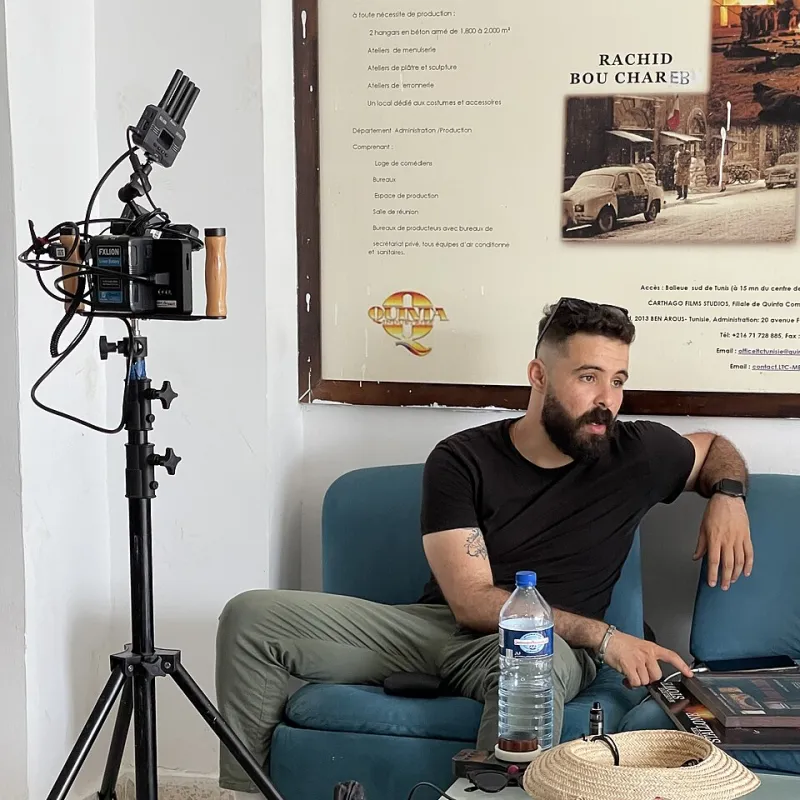
Photo: Agenda production, CC BY-SA 4.0, via Wikimedia Commons
On paper, 127 Hours should not work. A man is pinned by a rock in a canyon for the best part of a week. He cannot move. There is no villain, no love interest to rescue him, no ticking bomb — only a boulder, a multi-tool, and the inside of one man's head. In the hands of a lesser director, it is a premise for a bleak art-house short. In the hands of Danny Boyle, it became an Oscar-nominated film that had audiences fainting in cinemas and cheering by the end.
The question worth asking is not what happens in the film — most of us know the outcome of Aron Ralston's 2003 ordeal — but how Boyle made ninety minutes of stillness feel like a sprint.
The Kinetic Instinct of a British Original
Boyle arrived at the project as one of British cinema's most restless talents. From the euphoric anarchy of Trainspotting — a film that defined a generation of UK cinema — through The Beach, 28 Days Later, and the Oscar-winning Slumdog Millionaire, his signature has always been momentum. Even his quiet films move. His characters think quickly, live quickly, and their stories are edited accordingly.
That instinct proved essential here. Boyle has spoken in interviews about his fear of making a film that felt like a staged play — one location, one face. His solution was to treat the canyon not as a prison but as a stage for the mind, and to fill the screen with everything happening inside Ralston's head.
Split Screens and Split-Second Pacing
The film's most distinctive visual device is its use of split screens — sometimes three or four at a time — showing multiple angles, memories, and fantasies simultaneously. Rather than a gimmick, the technique mirrors the fractured, racing consciousness of a man with nothing to do but think. When Ralston examines his water supply, we see the bottle, his face, his calculations, and the sky above the canyon all at once.
Editor Jon Harris cut the film with extraordinary tempo, particularly in the first act, where Boyle deliberately saturates the screen with energy — quick cuts, jump cuts, superimpositions — before the rock falls and everything stops dead. The contrast is the point. When the motion halts, the audience feels the loss of it viscerally. From that moment, every small action — the rasp of a blade, the sip of water — carries the weight of a set piece.
A Performance Built in a Single Space
James Franco, earning an Academy Award nomination for his performance, spent the shoot confined to a cramped canyon set while Boyle and cinematographer Enrique Chediak circled him with handheld cameras, shooting from every conceivable angle. Behind-the-scenes footage shows the crew rigging cameras into the rock walls themselves to capture the intimacy the film demanded.
Boyle has credited Ralston himself, who visited the set, with giving the production its moral spine. The director insisted the film never flinch from the amputation scene — a sequence shot with unflinching practicality — because, as he argued, the audience had earned the truth. British critics at the time noted the scene's effect on screenings across the UK, with reports of fainting at early festival showings giving the film a notorious reputation that only sharpened anticipation.
Music, Memory, and Momentum
A. R. Rahman's score, reuniting with Boyle after Slumdog Millionaire, does the emotional heavy lifting in the film's quieter stretches, while Sigur Rós's music lends the canyon a cathedral-like grandeur. Sound design, too, is a character: the drip of water, the buzz of a raven, the silence between heartbeats.
Why It Matters
127 Hours stands as proof that spectacle need not mean scale. It is a film about a man who cannot move, made by a director incapable of standing still — and that tension is precisely its genius. For UK audiences who grew up on Boyle's Trainspotting energy, the film represents a mature distillation of everything that makes his cinema thrilling: velocity, empathy, and an absolute refusal to waste a single second.