The Unedited Confession: Aron Ralston's Camcorder Tapes and What Danny Boyle Left Out
A Camera Left Running
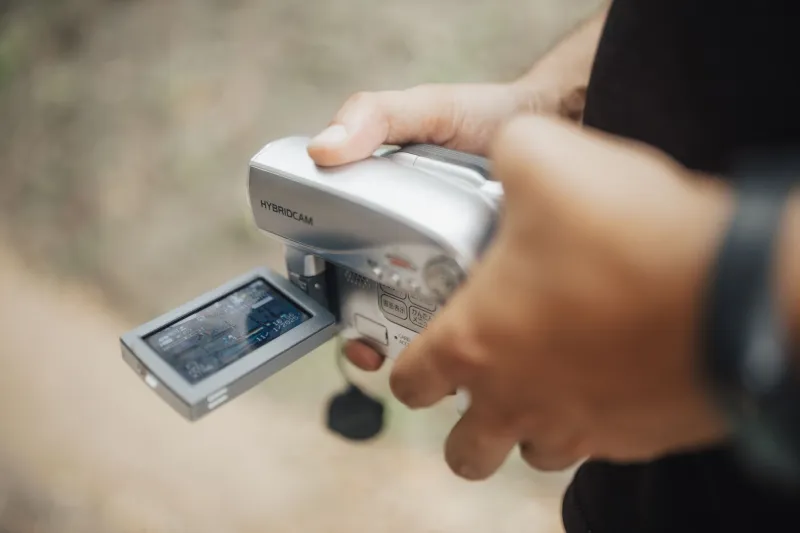
In April 2003, Aron Ralston did something that would later complicate every retelling of his ordeal: he turned his camcorder on himself. Trapped in a narrow slot in Blue John Canyon, his right arm pinned by a fallen boulder, he recorded a series of messages. Some were practical. Some were farewells. Some were the halting, unpolished attempts of a man trying to leave a record for people he might never see again. Those recordings have since become the most quietly unsettling artefacts of the entire 127 Hours story — not because they are graphic, but because they are unmediated.
Danny Boyle's 2010 film dramatises these moments with James Franco speaking directly to a small camera. The staging is deliberate: the lens becomes a confidant, a diary, a way of breaking the solitude. But the real tapes are not a narrative device. They are evidence. And for British audiences drawn to the film's blend of endurance and introspection, the distinction matters more than it first appears.
What the Real Recordings Actually Are
The surviving footage is not a single, coherent video diary. It is a set of fragments, recorded at different points during Ralston's five-day ordeal. He addresses his family, his friends, and, in a sense, himself. He describes the canyon, his situation, and the diminishing likelihood of rescue. The tone shifts — now matter-of-fact, now strained, now almost conversational. There is no score, no cutaway, no sympathetic close-up. The camera stays where he put it.
That lack of editorial shaping is precisely what makes the material difficult. In 127 Hours, the video diary scenes are paced and framed to carry the audience through Ralston's psychological arc. The real recordings do not offer an arc. They offer a man thinking aloud under extreme pressure, with all the repetition and dead air that implies. For a cinema audience accustomed to narrative tidiness, the raw tapes can feel almost intrusive — as though we have wandered into a private room rather than settled into a story.
Why Some Footage Stayed Out of the Film
Boyle has never pretended that 127 Hours is a documentary. The film is based on Ralston's memoir and on extensive consultation, but it remains a reconstruction. Some of the real recordings were simply too raw for a mainstream feature. Others raised questions of consent, ownership, and privacy that a studio release was never going to resolve on screen. Ralston has discussed the tapes publicly, and excerpts have appeared in television documentaries and online archives, but the complete record has never been placed in the public domain in any straightforward way.
There is also the question of tone. The real tapes contain moments of despair that a 15-certificate film can imply but not dwell on. They contain the sound of a man bargaining with himself. They contain silences that no editor would choose. For British viewers used to the measured conventions of television documentary, the partial availability of this material creates a peculiar effect: we know it exists, we have seen fragments, but we have not been allowed to sit with it entire.
The Confession and the Performance
What changes when you watch James Franco after hearing the real recordings? Quite a lot, actually. Franco's performance is often praised for its intimacy, and rightly so, but the real tapes reveal that Ralston was already performing — not in a cynical sense, but in the ordinary sense that speaking to a camera is always a kind of address. He was choosing words for an imagined audience. He was leaving something behind. Franco's achievement is to reconstruct that address without impersonating the man.
The difference is subtle. In the film, the camera is a character: it listens, it judges, it occasionally offers a flicker of hope. In the real recordings, the camera is a machine on a rock. That gap between the dramatic confidant and the inert device is where 127 Hours does its most interesting work. British audiences, who have a long affection for unvarnished documentary and a healthy scepticism about Hollywood gloss, tend to feel that gap acutely.
The Afterlife of the Tapes
The recordings have not disappeared. They circulate in fragments, discussed in interviews and excerpted in documentaries. Their scarcity gives them an aura. For devotees of the film, they function as a kind of appendix — a way of checking the dramatisation against something rougher. For casual viewers, they are a reminder that the story did not begin with a screenplay.
That afterlife also says something about British fascination with the unmediated. We like to know what was left on the cutting-room floor. We like to hear the voice before the score was added. The real tapes do not undermine 127 Hours; they deepen it. They remind us that the film's most famous scenes of a man talking to a camera were, in life, something stranger and more desperate: a person making a record because there was nothing else left to do.